Why do dealerships lose leads?
Dealerships lose leads because they reply late and inconsistently. Leads arrive at all hours from ads, WhatsApp, marketplaces and the website, while your salespeople work the showroom floor, ride along on test drives or sit off shift. By the time someone replies, the buyer has contacted two other stores.
Qualification is the second leak. Without a shared question script, each salesperson records different information in the CRM, or none. Your managers can't tell which leads are ready to buy, and follow-ups depend on memory.
An AI agent takes the repetitive, time-sensitive part of the job: first response, qualification, stock check, scheduling and data entry. Your salespeople keep negotiation and the showroom visit, where they earn their commission.
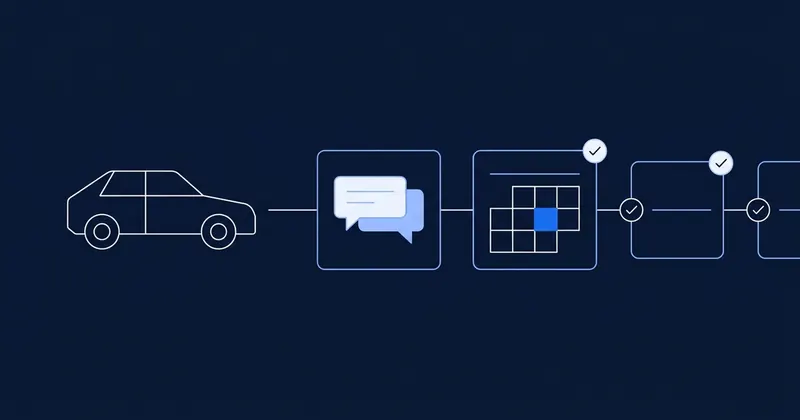
What does the lead-to-test-drive flow look like?
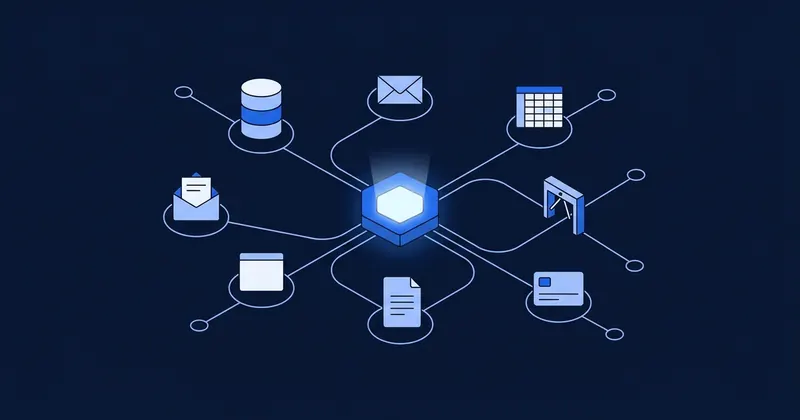
We use the flow below as a starting point with dealership groups. Each step reads from or writes to a system your dealership already uses.
- Capture the lead. Meta Lead Ads delivers a submitted form by webhook (Meta's documentation on retrieving leads (opens in a new tab) covers webhooks and bulk reads), or a customer writes to the dealership's WhatsApp number.
- Reply within minutes. The agent greets the customer by name on WhatsApp, introduces itself as the store's virtual assistant and confirms the model of interest.
- Qualify. It asks what your best salesperson asks: new or used, budget range, financing or cash, trade-in vehicle, preferred store and buying timeframe.
- Check stock. It queries the dealer management system for matching vehicles by model, trim, colour and store, and offers cars you have on the lot.
- Book the test drive. It proposes open slots from the store calendar, confirms one and sends a reminder the day before.
- Update the CRM. It creates or updates the lead with each answer, the transcript, a qualification score and the appointment, and assigns it to the right salesperson.
- Hand over. The salesperson gets a summary before the visit and takes it from there.
For messaging, the agent uses the official WhatsApp Business Platform (opens in a new tab) instead of a personal phone. You get a reliable service within Meta's policies, and the dealership keeps the conversations when an employee leaves.
What WhatsApp rules shape the flow?
Two rules from Meta's WhatsApp Business Platform pricing documentation (opens in a new tab) drive the design. The agent can send free-form replies inside a 24-hour customer service window, which reopens each time the customer writes. Outside that window, for a follow-up two days later, the business must send a pre-approved template, and Meta charges per delivered message by category and by the recipient's country. We design the agent to reply inside the window where it can, and to use templates for reminders and follow-ups.
Where does a human need to approve?
Anything that commits the dealership's money or could damage the relationship should wait for a person. We configure these gates:
| Situation | What the agent does | Who approves |
|---|---|---|
| Customer asks for a discount or special price | Records the request and the vehicle, and tells the customer a manager will reply | Sales manager |
| Trade-in valuation | Collects make, model, year, mileage and photos | Used-car appraiser |
| Financing simulation with personal data | Explains the next steps and transfers the customer to the finance desk | Finance and insurance staff |
| Complaint or negative tone | Stops the automation and alerts the store | Store manager |
| Vehicle reserved for another customer | Offers alternatives from stock | Salesperson, if the customer insists |
Gates make the agent safe to leave running at 11 p.m. on a Sunday. We apply the same rule to each workflow we run; see security and control.
Which metrics should a dealership track?
Measure the sales funnel. These numbers show whether the agent pays off:
- Time to first response: from lead creation to the first message the customer receives.
- Response coverage: the share of leads that got a reply, nights and weekends included.
- Qualification rate: the share of leads with all qualification fields complete in the CRM.
- Test drives booked and attended: attendance sells cars, and bookings alone prove little.
- Lead-to-sale conversion by source: tells you which campaigns deserve more budget.
- Escalation rate and handover time: how often a person steps in, and how fast.
- Salesperson hours saved: time your team no longer spends on first replies and data entry.
Record a baseline for each metric before go-live. Without one, you won't be able to say whether the agent made a difference.
What are the most common mistakes?
- Automating replies without stock data. An agent that can't see inventory invents availability or answers in vague terms, and customers notice.
- Leaving out the CRM. If conversations don't reach the CRM, managers lose visibility and salespeople retype everything.
- Using a personal WhatsApp number. The setup breaks when the employee leaves, and it puts the account at risk under Meta's policies.
- A vague handover. If the salesperson doesn't know about the booking, the customer arrives to an empty desk.
- Hiding the assistant. Customers accept a virtual assistant. They don't accept deception.
- Counting messages. Track attended test drives and sales; conversation volume tells you little about revenue.
How do you protect customer data?
Lead data is personal data, so data protection law applies: the LGPD in Brazil and the GDPR in the European Union, among others. Configure the agent to collect what the sales process needs and nothing more, store conversations in the dealership's systems, and run it under a data processing agreement that forbids any other use. Keep access revocable at any moment and log each action.
How should a dealership group start?
Start with one lead source and a few stores:
- Choose the highest-volume source, usually Meta Lead Ads or WhatsApp.
- Agree on the qualification questions with your best sales managers.
- Connect the CRM, the dealer system and the store calendars.
- Go live in a pilot group of stores with approval gates switched on.
- After four to six weeks, compare the metrics with the baseline, then roll out to more stores.
New to the concept? Read what a managed AI agent is and how it differs from a chatbot. Planning the budget? See how much it costs to deploy an AI agent. The use cases section on our home page covers other workflows.
Frequently asked questions
Can an AI agent reply to leads on WhatsApp automatically?
Yes, through the official WhatsApp Business Platform. The agent can send free-form replies while the customer service window that the customer's message opens stays active. Outside that window, the business must send pre-approved message templates, following Meta's rules.
Will customers know they are talking to an AI agent?
They should. We recommend that the agent introduce itself as the dealership's virtual assistant and offer a person at any point. Customers trust a business that tells them, and regulators expect it more each year.
Does the agent negotiate prices or trade-in values?
No. Your sales team handles price negotiation, trade-in valuations and discounts. The agent collects what they need (model of interest, trade-in vehicle, financing intent) and hands the lead over with full context.